Jira vs ClickUp for Bug Tracking: Which One Fits Your QA Workflow?
Jira vs ClickUp for bug tracking comes down to one decision: do you want a defect tracker that happens to do project management, or a project management platform that happens to track defects? Jira was born in 2002 as an issue tracker for software teams — its Bug work type, audit trail, and JQL reporting are purpose-built for QA. ClickUp launched in 2017 as an all-in-one work platform — its custom statuses, multi-view boards, and embedded docs let bug tracking live alongside roadmaps, sprints, and cross-functional planning. Both can track bugs well in 2026. The right pick depends on team mix, integration depth, and what kind of friction you can live with.
TL;DR — Key takeaways
- Jira Standard lists at $7.53/user/month (annual, 1–10 user tier, dropping to ~$6.05 at 11+ users); ClickUp Unlimited lists at $7/user/month annual. Headline parity, very different total cost of ownership.
- Jira ships a native Bug work type with version-tracking, audit logs, JQL, and enforced workflows out of the box. ClickUp models bugs through Custom Task Types and Custom Fields — equally flexible, less rigid by default.
- Severity vs priority schemas are first-class in Jira and DIY in ClickUp. If your compliance posture requires both fields with controlled vocabularies, Jira gets you there faster.
- Automation depth favours Jira for developer toolchain triggers (PR merged, build failed, deploy completed); ClickUp's visual automation builder is easier for non-technical QA leads.
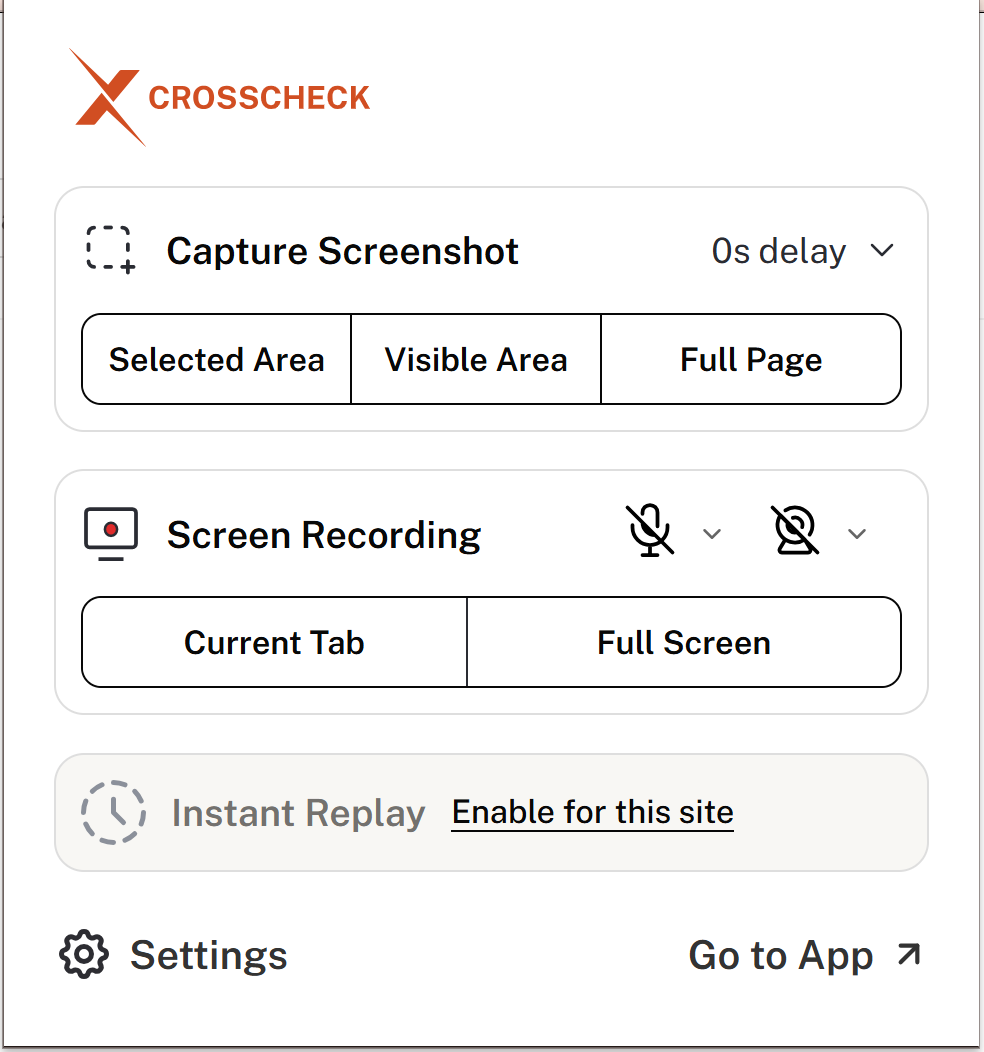
- Crosscheck's Chrome extension ships bug reports — with screen recording, console logs, and network requests — natively into either tool, so the underlying choice is no longer locked in by your bug-reporting workflow.
What each tool is actually built for
The design intent of each platform matters more than any spec sheet.
Jira is a defect tracker that grew into a project management suite. Atlassian launched it in 2002 for software teams managing bugs and feature requests. Two decades later, its data model still reflects that origin — every Issue has a Type (Bug, Task, Story, Epic), a Status governed by a Workflow, a Priority, Affected and Fix Versions, components, an audit log, and a JQL-queryable history. The platform's gravity pulls toward structured engineering work.
ClickUp launched in 2017 with the explicit pitch of "one app to replace them all" — tasks, docs, goals, whiteboards, dashboards, chat, time tracking. Bug tracking arrived through the same primitives that handle marketing campaigns and HR onboarding: Tasks, Custom Fields, Custom Statuses, and Custom Task Types. That generality is the source of its flexibility and the source of its friction for rigorous QA.
The implication is operational: in Jira, the path of least resistance produces structured, auditable defect data. In ClickUp, the path of least resistance produces whatever you configure — excellent or chaotic depending on how seriously you treat setup.
Pricing in 2026 — verified list rates
Pricing is where headline numbers and real spend diverge most. Both vendors publish per-user annual rates that look comparable. The total cost of ownership rarely is.
Jira Cloud pricing (verified May 2026)
| Plan | Price (annual, per user/month) | Key limits |
|---|---|---|
| Free | $0 | Up to 10 users, 2 GB storage, 100 automation runs/user/month |
| Standard | ~$7.53 at 1–10 users (drops to ~$6.05 at 11+) | 35,000 user cap, 250 GB storage, project-level automation |
| Premium | ~$13.53 at 1–10 users | Advanced roadmaps, sandbox, global automation, 24/7 support |
| Enterprise | Custom (801+ users) | Multi-instance, unlimited storage, dedicated support |
Two things shape the real Jira bill. Since 2024, Atlassian uses tier-based billing — a 12-person team pays for the 11–25 user tier, so each new hire past a tier boundary triggers a step jump. Second, the Marketplace effect: test management (Xray, Zephyr), advanced reporting (eazyBI), structured roadmapping (Structure) all carry their own per-user subscriptions. Teams budgeting Standard at $7.53 often hit a blended $12–$18/user once add-ons are in.
ClickUp pricing (verified May 2026)
| Plan | Price (annual, per user/month) | Key limits |
|---|---|---|
| Free Forever | $0 | Unlimited users and tasks, 100 MB storage, 100 automation uses/month |
| Unlimited | $7 | Unlimited storage, dashboards, integrations, Gantt views |
| Business | $12 | Advanced automations (25,000/month), workload management, SSO |
| Business Plus | $19 | Custom permissions, role creation, increased automation |
| Enterprise | Custom | Advanced security, white labelling, dedicated success |
ClickUp's pricing is more linear, but two recent changes matter. ClickUp Brain (the AI layer) is a separate $9/user/month add-on. And in late 2024 ClickUp reclassified internal "guests" as "limited members" billed at full rates — organisations with external contractors saw bills jump without renegotiation.
Pricing verdict: ClickUp is generally cheaper for teams under 50 users on apples-to-apples plans. Jira's true cost is competitive at enterprise scale only with disciplined Marketplace governance.
The bug data model — where the comparison really lives
A bug report has more in common with a database row than a sticky note. Severity, priority, environment, browser, build number, reproduction steps, expected vs actual behaviour, assignee, reporter, resolution, fix version — each field has a job. The platforms differ in how rigidly that schema is enforced.
Jira's native Bug work type
Jira treats Bug as a first-class Work Type (Atlassian renamed Issue Types to Work Types in 2024). A fresh Jira Software project ships with Bug pre-configured — dedicated icon, default workflow (Open → In Progress → In Review → Resolved → Closed), and a built-in screen with Priority, Affects Version, Fix Version, Components, Labels, and Environment. Severity is a five-minute custom field add; Priority is default, with the canonical Highest/High/Medium/Low/Lowest scheme.
The harder-to-replicate advantage is workflow enforcement. A Workflow defines exactly which Status transitions are legal. You can require a Resolution on close, block movement to "Resolved" without an assignee, add a Validator that demands a linked Pull Request before "In Review". Every transition is logged, immutable, and queryable. For regulated industries — fintech, healthtech, anything SOC 2 or ISO 27001 — that audit trail is not a nice-to-have.
JQL is the other lock-in. type = Bug AND priority in (Highest, High) AND fixVersion = "2026.2" AND status != Closed is one filter, savable as a dashboard gadget, shareable across the team. ClickUp has no equivalent query language.
ClickUp's flexible task model
ClickUp models bugs through Custom Task Types (released in 2023) layered on standard Tasks. You create a Bug task type, add Custom Fields for Severity, Environment, Browser, Steps to Reproduce, and Console Logs, and define Custom Statuses that mirror your bug lifecycle. The result can be excellent for teams that take setup seriously.
What ClickUp doesn't enforce is the discipline. Statuses can be skipped, fields left empty unless explicitly required, and there's no built-in equivalent of a Jira Workflow Validator. ClickUp's strength is multi-view flexibility — the same bug list shows as List, Board, Calendar, Gantt, Timeline, or Table without duplicating data. Triage by severity in Board view in the morning, review by sprint in Timeline view in the afternoon, one underlying dataset.
ClickUp's other genuine advantage: native Docs mean test plans, triage criteria, and runbooks live in the same tool, linkable from any bug ticket. Jira pushes documentation to Confluence — separate product, separate subscription.
Severity vs priority — first-class in Jira, DIY in ClickUp
The distinction between severity (how bad is the defect technically) and priority (how urgent is it relative to other work) is one of the most-violated rules in QA. Jira ships Priority as default and Severity as a one-step custom field with a controlled vocabulary. ClickUp can model both — only if you remember to add the Custom Fields and enforce them culturally. Nothing in the product nudges teams toward separating them. The Crosscheck primer on severity vs priority covers the failure mode in detail.
Automation — depth vs accessibility
Automation is where QA teams unlock real leverage: auto-assign by component, auto-link bugs to PRs, auto-transition tickets on deploy, auto-roll-up defect counts into a morning dashboard.
Jira Automation uses a trigger-condition-action model with deep ecosystem hooks. Triggers include issue events, scheduled intervals, incoming webhooks, branch created in Bitbucket/GitHub, pull request merged, build succeeded/failed, and deployment completed. Smart values like {{issue.assignee.displayName}} give rules access to issue metadata. The Free tier caps at 100 automation runs per user per month — restrictive past a handful of rules. Standard moves to 1,700 monthly runs per user; Premium and Enterprise lift the cap further and add global rules across multiple projects.
ClickUp Automation uses a visual when-this-then-that builder a non-technical QA lead can configure without training. Native automations cover task creation, status changes, field updates, assignee changes, comments, and outbound webhooks. Free caps at 100/month workspace-wide; Unlimited unlocks 1,000/month, Business 25,000/month, Business Plus 100,000/month. Zapier, Make, and n8n cover scenarios the native builder doesn't.
The honest split: Jira automation has more developer-toolchain depth (especially code events), ClickUp automation is more accessible to non-engineers. Both have meaningful run-count limits on lower tiers.
Reporting — JQL power vs dashboard polish
For engineering managers, the reporting layer is where the tool justifies its line item.
Jira reporting is Agile-native. Built-in reports include velocity charts, sprint burndown and burnup, cumulative flow diagrams, control charts, version reports, and the recently-revamped Goals and Plans views. For pure bug tracking, the Issue Navigator with JQL earns Jira its reputation — any filter expressible in JQL becomes a dashboard gadget, saved filter, or API query. "All bugs of severity Critical or High, in components Auth or Payments, unresolved more than 7 days" is one query. Saveable. Shareable.
ClickUp Dashboards are visually richer and faster to build. The widget library covers task counts by status, workload by assignee, sprint velocity, burndown, time tracking, custom field rollups, and embeddable external URLs. The trade-off is depth — ClickUp's Agile metrics exist but lag Jira's in fidelity, and there's no JQL-equivalent for deeply-conditional queries. Teams often export both tools to BI platforms (Looker, Metabase, Tableau) for anything beyond built-in dashboards.
Integrations — developer toolchain vs breadth
Jira's Atlassian Marketplace lists over 3,000 apps. Native developer integrations are the deepest in the category: GitHub, GitLab, and Bitbucket surface PRs, commits, and branches on the issue panel. Jenkins, CircleCI, and Bamboo show build status. Sentry, Datadog, and Honeybadger send incidents into Jira projects. Confluence is essentially a native extension. For bug tracking that has to mesh with CI/CD, code review, and observability, Jira's depth is hard to match.
ClickUp's integration library covers roughly 1,000 tools natively, plus universal coverage through Zapier, Make, and n8n. GitHub, GitLab, Figma, Slack, Zoom, Sentry, and Loom have first-party connectors — typically shallower than Jira's. ClickUp's GitHub connector shows linked PRs but doesn't surface commit and branch history inside the task view the way Jira does.
Both tools work with Crosscheck natively — the free Chrome extension captures screenshots, screen recordings, console logs, and network requests, then files a fully-contextual bug report into Jira or ClickUp in one click. For teams running either tool, Crosscheck eliminates the back-and-forth round of "what browser were you on" and "what was in the console" that bloats most QA loops.
Learning curve — the most practically important factor
This is the variable teams underweight when evaluating bug trackers, and overweight after using them for six months.
Jira's learning curve has improved — the 2023 navigation redesign and 2024 Work Type rename closed real usability gaps — but accumulated two-decade complexity remains. A new QA engineer is usable in Jira within a week. Productive with JQL, dashboards, and component-level reporting takes two to four weeks. Admin work — workflow design, screen schemes, permission schemes — is a job in itself; organisations above ~50 Jira users almost always have a dedicated admin or an Atlassian Solutions Partner on retainer.
ClickUp's learning curve is shallower at the start and surprisingly deep underneath. New users file tasks within an hour. The slope steepens when configuring a rigorous QA workflow — the sheer number of ClickApps, view types, custom field types, and automation triggers makes it hard to know where to start, and the platform offers fewer opinionated defaults. Teams that succeed with ClickUp typically dedicate one "ClickUp owner" for the first month of rollout.
The honest read: ClickUp gets to a working setup faster. Jira gets to a more durable setup if you invest the upfront time.
Pros and cons at a glance
Jira
Pros
- Native Bug Work Type with default Priority field and trivial Severity addition
- Workflow validators that hard-block invalid transitions — essential for regulated environments
- JQL for arbitrarily-deep ad-hoc queries; saveable as filters and dashboard gadgets
- Deepest developer toolchain integrations in the category (GitHub, GitLab, CI/CD, Confluence)
- Mature audit log and version-tracking out of the box
Cons
- Tier-based pricing means small teams overpay; Marketplace add-ons inflate the true bill
- UX still feels heavy for teams whose work isn't software-engineering-centric
- Confluence is a separate product and separate subscription — documentation lives elsewhere
- Workflow administration is a specialist skill
- Free tier's 100 automation runs/user/month is restrictive past trivial setups
ClickUp
Pros
- Predictable annual pricing with generous lower-tier feature coverage
- Custom Task Types and Custom Fields make bug modelling flexible
- Multi-view flexibility (List, Board, Gantt, Calendar, Timeline, Table) without data duplication
- Native Docs reduce documentation tool sprawl
- Visual automation builder accessible to non-engineers
Cons
- No native Bug type — Severity, Priority, and other fields are DIY each time
- No JQL equivalent; complex filtering tops out below Jira's ceiling
- Agile-specific reports (velocity, burndown) lag Jira's depth
- Workflow enforcement is cultural rather than systematic
- Late-2024 guest-to-member reclassification surprised some teams with steep bill increases
Which tool fits which team
Choose Jira for bug tracking if:
- Your team is dedicated software engineering or QA, not a cross-functional generalist setup
- You need hard-enforced workflow transitions and an immutable audit trail
- Your developers rely on GitHub, GitLab, Bitbucket, or Jenkins integration
- You operate in a regulated industry (fintech, healthtech, defence) where compliance audits expect tracker-level evidence
- You manage 50+ developers and have or will hire a dedicated tools admin
Choose ClickUp for bug tracking if:
- Your QA team works alongside marketing, ops, or product teams sharing the same workspace
- You want fast onboarding for mixed technical and non-technical members
- Cost predictability matters more than enforcement depth
- You value bug tracking, docs, sprints, and roadmaps in one platform
- Your workflows shift often enough that flexibility beats enforcement
Choose both, deliberately, if: You're like a growing share of teams in 2026 — Jira for active engineering sprints and defect tracking, ClickUp for cross-functional planning, content ops, and roadmap visibility. Crosscheck's bug reporting workflow integrates with both, so the tracker choice doesn't lock down your bug-capture pipeline.
FAQ
Is ClickUp good for bug tracking?
Yes, with caveats. ClickUp tracks bugs well through Custom Task Types, Custom Fields, and Custom Statuses. The platform doesn't ship a native Bug type the way Jira does, so the rigor of your bug data depends on how carefully you configure fields and how culturally enforced your team's discipline is. For small and mid-size teams with a defined QA owner, ClickUp is a credible bug tracker. For large teams in regulated industries, Jira's enforced workflows are typically a better fit.
How much does Jira cost per user in 2026?
Jira Cloud Standard starts at approximately $7.53/user/month (annual billing) at the 1–10 user tier, decreasing to roughly $6.05 at 11+ users. Premium starts around $13.53. Both list rates exclude Atlassian Marketplace add-ons, which often add $2–$8 per user per month for teams using test management or advanced reporting plugins. Verify the current rate on Atlassian's pricing page since per-tier pricing shifts with team size.
Can I use Jira and ClickUp together for bug tracking?
Yes, and many teams do. A common pattern: engineering runs Jira for active sprints and defect tracking, while product, design, and cross-functional planning lives in ClickUp. Native integrations between the two are basic, but Zapier, Make, and n8n cover most sync patterns. A unified bug-reporting layer like Crosscheck files reports into whichever tool owns that piece of the workflow — so contributors don't have to remember which system holds which kind of work.
Does ClickUp have JQL?
No. ClickUp doesn't have a query language equivalent to Jira's JQL. Filtering happens through a visual filter builder layered on view types (List, Board, Table, Gantt). That filter UI covers most day-to-day needs but tops out below JQL's ceiling for deeply-conditional, ad-hoc queries. Teams needing JQL-grade flexibility usually export ClickUp data to a BI tool.
Which tool integrates better with GitHub for bug fixes?
Jira's GitHub integration is deeper. It surfaces commits, branches, and pull requests directly inside the issue panel, and Atlassian's automation triggers natively recognise GitHub events (PR opened, PR merged, branch created). ClickUp's GitHub integration links PRs to tasks but doesn't show commit-level detail inside the task view. For engineering-led teams where bug tickets need to mesh with PR-level code review, Jira's GitHub depth is the meaningful advantage.
What both tools can't fix on their own
A clean tracker doesn't fix a bad bug report. A ticket with no reproduction steps, no environment data, no console output, and no video lands in Jira and ClickUp the same way — as the start of three Slack messages between QA and a developer before anyone can actually work on it. The bottleneck in 2026's bug pipeline is rarely the tracker. It's the report quality entering it.
That's the gap Crosscheck closes — a free Chrome extension that captures screenshots, screen recordings, console logs, and network requests in one click, then files the complete report into Jira, ClickUp, Linear, GitHub, or Slack with full developer context attached. No paid tiers, no usage limits. The Crosscheck bug-report template walks through what a self-contained ticket looks like.
Start filing better bug reports today
Whichever tool you pick — Jira, ClickUp, or both — the highest-leverage upgrade is the report itself. Crosscheck adds a one-click bug-reporting layer that captures replay video, console, network, and environment metadata, then sends it into your existing tracker. Free Chrome extension, no paid plan, no per-user lock-in.
 Add to Chrome